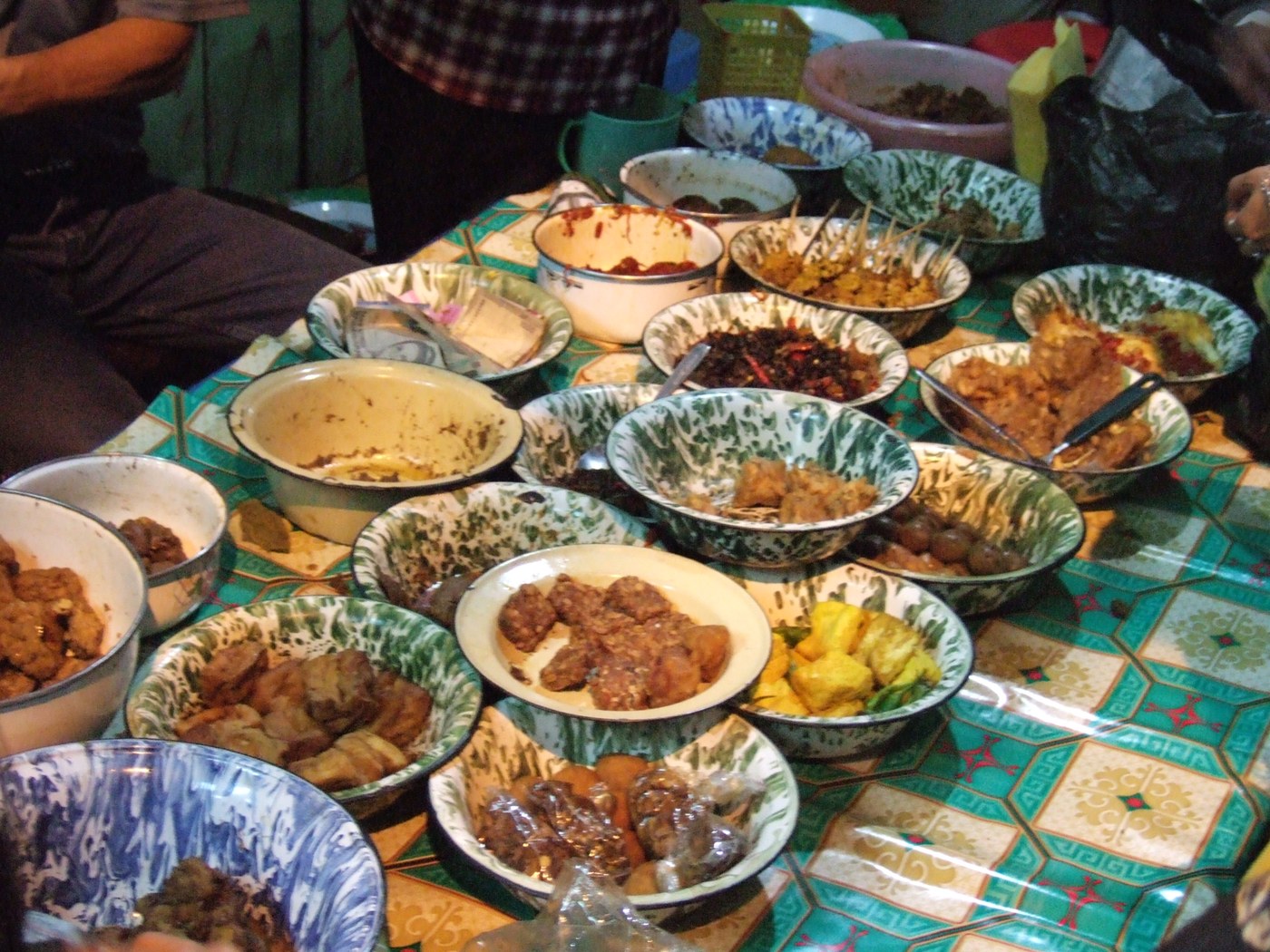
Nasi Jamblang: Cirebon Teak Leaf Rice
Steamed rice wrapped in teak leaves and filled with various side dishes. A unique Cirebon specialty distinguished by the fragrant teak leaf wrapping.
📑 In This Guide
💡 Did You Know?
This authentic recipe has been passed down through generations, preserving the rich flavors of Indonesian cuisine.
🛒 Ingredients
- 500 g steamed rice
- Dried teak leaves (leaves jati)
- Side dishes: sambal Fry, fried chicken, tempeh, tofu, potato balado, semur eggs
- Fried shallots
- Cracker crackers
👨🍳 Instructions
- Soak teak leaves in warm water until pliable.
- Place steamed rice in the center of a teak leaf.
- Add a selection of side dishes on top of the rice.
- Wrap the teak leaf tightly around the rice and side dishes.
- Secure with bamboo strips or toothpicks.
- Steam briefly to meld the flavors.
- Serve wrapped, allowing diners to unwrap at the table.
❓Frequently Asked Questions
What is Nasi Jamblang: Cirebon Teak Leaf Rice?
Steamed rice wrapped in teak leaves and filled with various side dishes. A unique Cirebon specialty distinguished by the fragrant teak leaf wrapping.
Where does Nasi Jamblang: Cirebon Teak Leaf Rice come from?
Nasi Jamblang: Cirebon Teak Leaf Rice originates from Indonesia. It is a beloved traditional dish that has been passed down through generations of Indonesian cooks.
Is Nasi Jamblang: Cirebon Teak Leaf Rice difficult to make?
Nasi Jamblang: Cirebon Teak Leaf Rice requires moderate cooking skills. While the steps are clear, some techniques need practice.
How do I store leftover Nasi Jamblang: Cirebon Teak Leaf Rice?
Store leftover Nasi Jamblang: Cirebon Teak Leaf Rice in an airtight container in the refrigerator for up to 4-5 days. The flavors actually improve overnight as the spices continue to meld.
🍽️You Might Also Like
🗺️More from Indonesia
🥘Recipes Using Similar Ingredients
← Previous Recipe
Nasi Megono: Pekalongan Spiced Rice
Indonesia
Next Recipe →
Nasi Jinggo: Small Bali Rice Pack
Indonesia
Recipe researched by the NusantaraEats Editorial Team
This recipe has been carefully researched, tested, and documented to preserve authentic Indonesian culinary traditions. Sources include traditional cookbooks, regional culinary experts, and cultural heritage references from Indonesia.