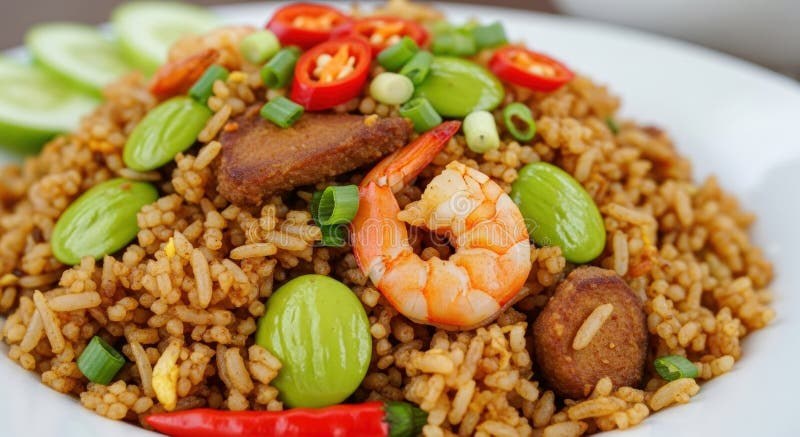
Nasi Goreng Petai: Stink Bean Fried Rice
Bold fried rice with stink beans (petai) — for adventurous eaters.
📑 In This Guide
💡 Did You Know?
This authentic recipe has been passed down through generations, preserving the rich flavors of Indonesian cuisine.
🛒 Ingredients
- 3 cups cold rice
- 100 g stink beans (stink beans)
- 100 g shrimp
- 3 eggs
- 3 red chilies, sliced
- 2 tbsp sweet soy sauce
- 2 garlic cloves, minced
- Belacan (shrimp paste)
👨🍳 Instructions
- Fry stink beans briefly and set aside.
- Stir-fry garlic and belacan until fragrant.
- Add shrimp and cook until pink.
- Scramble eggs to the side.
- Add rice and sweet soy sauce.
- Toss in stink beans and chilies.
- Serve immediately.
❓Frequently Asked Questions
What is Nasi Goreng Petai: Stink Bean Fried Rice?
Bold fried rice with stink beans (petai) — for adventurous eaters.
Where does Nasi Goreng Petai: Stink Bean Fried Rice come from?
Nasi Goreng Petai: Stink Bean Fried Rice originates from Indonesia. It is a beloved traditional dish that has been passed down through generations of Indonesian cooks.
Is Nasi Goreng Petai: Stink Bean Fried Rice difficult to make?
Nasi Goreng Petai: Stink Bean Fried Rice requires moderate cooking skills. While the steps are clear, some techniques need practice.
How can I adjust the spiciness of Nasi Goreng Petai: Stink Bean Fried Rice?
The spiciness can be easily adjusted by modifying the amount of chili peppers. For milder versions, reduce or omit the bird's eye chilies (cabe rawit).
How do I store leftover Nasi Goreng Petai: Stink Bean Fried Rice?
Store leftover Nasi Goreng Petai: Stink Bean Fried Rice in an airtight container in the refrigerator for up to 4-5 days. The flavors actually improve overnight as the spices continue to meld.
🍽️You Might Also Like
🗺️More from Indonesia
🥘Recipes Using Similar Ingredients
← Previous Recipe
Kue Mochi Ubi: Sweet Potato Mochi
Indonesia
Next Recipe →
Es Sop Buah: Mixed Fruit Soup Ice
Indonesia
Recipe researched by the NusantaraEats Editorial Team
This recipe has been carefully researched, tested, and documented to preserve authentic Indonesian culinary traditions. Sources include traditional cookbooks, regional culinary experts, and cultural heritage references from Indonesia.