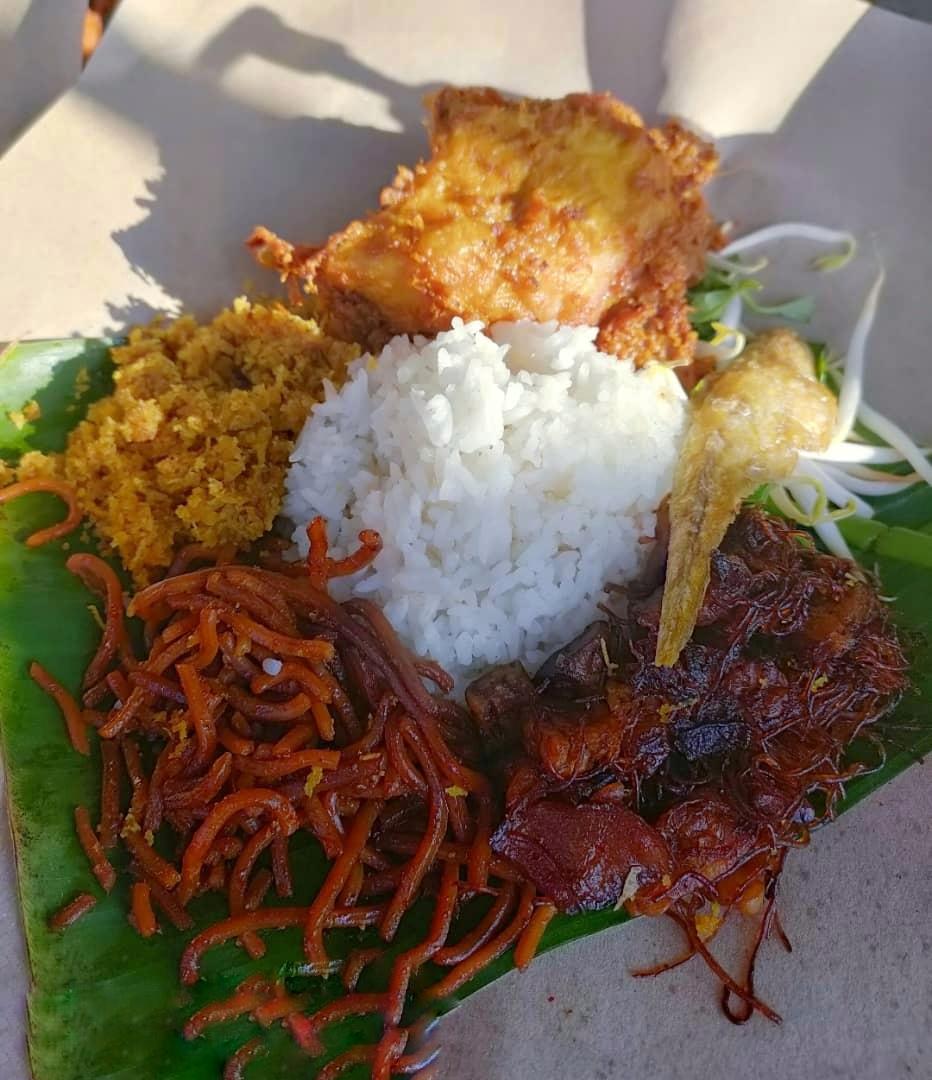
Nasi Ambeng: Javanese Ceremonial Rice
A Javanese ceremonial dish of steamed rice surrounded by an array of side dishes including shredded chicken, serundeng, shredded coconut, offal, and sambal, traditionally served during slametan communal feasts.
📑 In This Guide
💡 Did You Know?
This authentic recipe has been passed down through generations, preserving the rich flavors of Indonesian cuisine.
🛒 Ingredients
- 1 kg steamed rice
- 500 g chicken, boiled and shredded
- 200 g serundeng (spiced coconut flakes)
- 200 g ati gizzard (liver and gizzard), diced and fried
- 100 g shredded coconut, toasted
- 5 hard-boiled eggs
- Sambal Fry (spicy fried potatoes)
- shrimp paste sambal (shrimp paste chili sauce)
- Cracker crackers
👨🍳 Instructions
- Steam rice until fluffy.
- Boil chicken with bay leaves and lemongrass. Shred when cool.
- Mato serundeng: toast grated coconut with ground spices until golden and dry.
- Clean and dice liver and gizzard. Season and deep fry until crispy.
- Toast shredded coconut with a pinch of salt until golden.
- Hard-boil eggs, peel, and optionally fry until golden.
- Mato sambal Fry from diced potatoes, spices, and chili.
- Arrange rice on a banana leaf-lined plate with all side dishes around it.
- Serve communally, allowing guests to help themselves.
❓Frequently Asked Questions
What is Nasi Ambeng: Javanese Ceremonial Rice?
A Javanese ceremonial dish of steamed rice surrounded by an array of side dishes including shredded chicken, serundeng, shredded coconut, offal, and sambal, traditionally served during slametan communal feasts.
Where does Nasi Ambeng: Javanese Ceremonial Rice come from?
Nasi Ambeng: Javanese Ceremonial Rice originates from Indonesia. It is a beloved traditional dish that has been passed down through generations of Indonesian cooks.
What makes Nasi Ambeng: Javanese Ceremonial Rice different from other Indonesian meat dishes?
The key distinction lies in the spice blend and cooking method. Nasi Ambeng: Javanese Ceremonial Rice uses 200 g serundeng (spiced coconut flakes) that sets it apart. The careful preparation preserves the fresh flavors of the ingredients.
Is Nasi Ambeng: Javanese Ceremonial Rice difficult to make?
Nasi Ambeng: Javanese Ceremonial Rice requires moderate cooking skills. While the steps are clear, some techniques need practice.
How can I adjust the spiciness of Nasi Ambeng: Javanese Ceremonial Rice?
The spiciness can be easily adjusted by modifying the amount of chili peppers. For milder versions, reduce or omit the bird's eye chilies (cabe rawit).
How do I store leftover Nasi Ambeng: Javanese Ceremonial Rice?
Store leftover Nasi Ambeng: Javanese Ceremonial Rice in an airtight container in the refrigerator for up to 4-5 days. The flavors actually improve overnight as the spices continue to meld.
🍽️You Might Also Like
🗺️More from Indonesia
🥘Recipes Using Similar Ingredients
← Previous Recipe
Nasi Kebuli: Arab-Indonesian Spiced Rice
Indonesia
Next Recipe →
Nasi Bakar: Grilled Rice in Banana Leaf
Indonesia
Recipe researched by the NusantaraEats Editorial Team
This recipe has been carefully researched, tested, and documented to preserve authentic Indonesian culinary traditions. Sources include traditional cookbooks, regional culinary experts, and cultural heritage references from Indonesia.