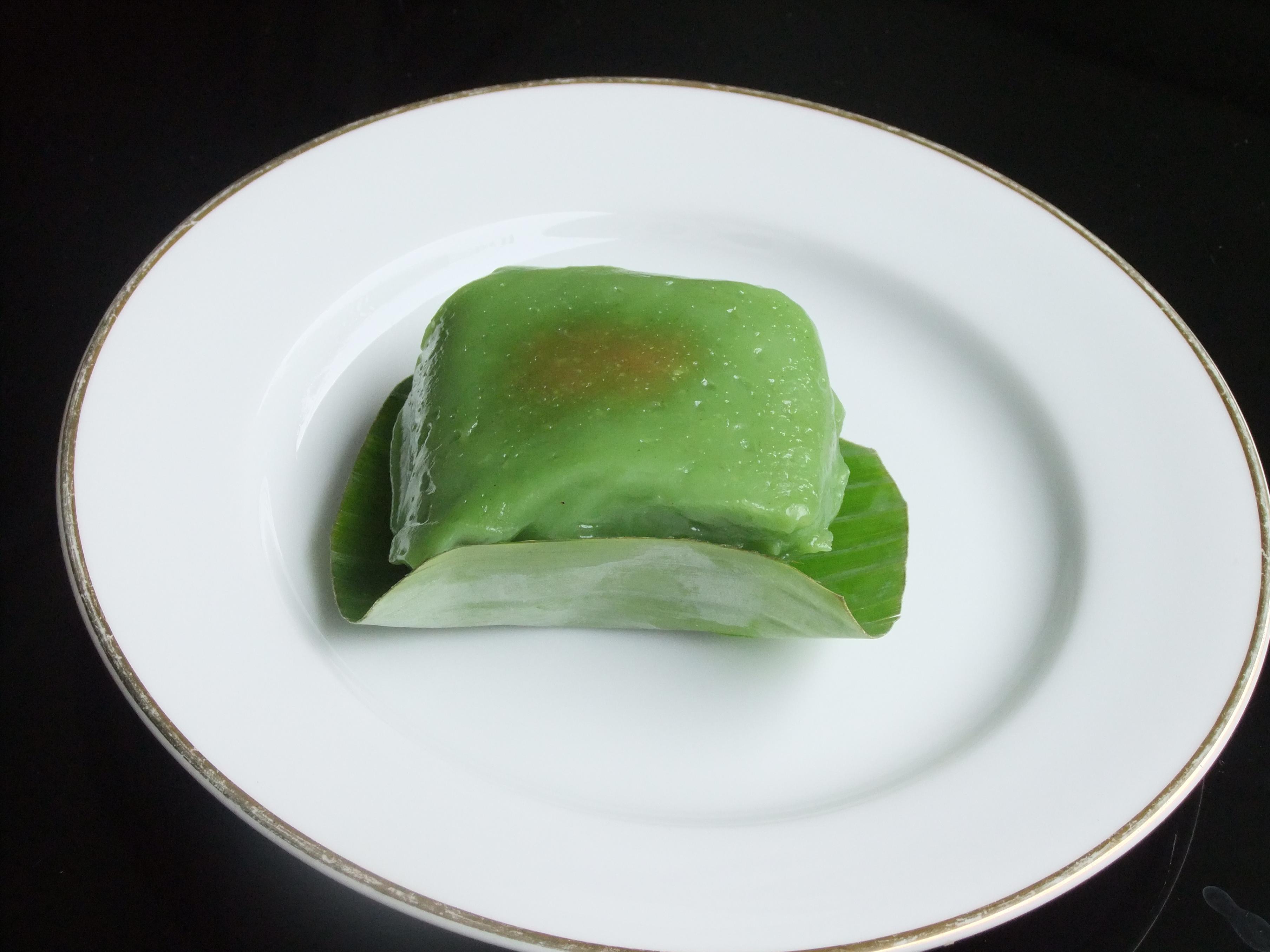
Kue Bugis: Glutinous Rice Cake with Coconut Filling
Kue bugis is a traditional snack originating from the Bugis-Makassar people of South Sulawesi. It consists of soft, sticky glutinous rice flour skin coloured green with pandan, filled with sweet grated coconut cooked in palm sugar, and wrapped in banana leaves before steaming.
📑 In This Guide
💡 Did You Know?
This authentic recipe has been passed down through generations, preserving the rich flavors of Indonesian cuisine.
🛒 Ingredients
- 200 g glutinous rice flour
- 100 g tapioca starch
- 150 ml coconut milk
- green food coloring pandan
- Filling: 200 g coconut grate
- 150 g palm sugar
- banana leaves for wrapping
👨🍳 Instructions
- Make Filling: Cook grated coconut with palm sugar until thickens
- Mix glutinous rice flour, tapioca, coconut milk, and food coloring green
- Knead until dough smooth and elastic and berwarna green
- Take some dough, flatten, fill with coconut
- Wrap with leaf banana, semat with toothpick/stick
- Steam selama 20-25 minutes until cooked
💡 Tips
The filling must be completely cool before wrapping. Use banana leaves that have been softened over heat so they do not tear.
📜History & Origin
The Story Behind This Dish
Kue Bugis is a Bugis-Makassar culinary heritage that is well-known throughout Indonesia.
🔥Cooking Mastery
Technique
Filling green glutinous rice flour dough with coconut palm sugar, wrapping in banana leaves, and steaming.
🗺️Regional Variations
Regional Differences
In South Sulawesi, Kue Bugis is often served at traditional ceremonies and religious celebrations.
🥗Nutrition & Dietary Info
Nutritional Profile
Carbohydrates from glutinous rice flour. Fiber from grated coconut. Palm sugar contains minerals.
❓Frequently Asked Questions
What is Kue Bugis: Glutinous Rice Cake with Coconut Filling?
Kue bugis is a traditional snack originating from the Bugis-Makassar people of South Sulawesi. It consists of soft, sticky glutinous rice flour skin coloured green with pandan, filled with sweet grated coconut cooked in palm sugar, and wrapped in banana leaves before steaming.
Where does Kue Bugis: Glutinous Rice Cake with Coconut Filling come from?
Kue Bugis: Glutinous Rice Cake with Coconut Filling originates from Makassar, South Sulawesi. It is a beloved traditional dish that has been passed down through generations of Indonesian cooks.
Can I find Kue Bugis: Glutinous Rice Cake with Coconut Filling outside Indonesia?
Kue Bugis: Glutinous Rice Cake with Coconut Filling can be found at Indonesian restaurants and Asian grocery stores in many countries. However, the authentic taste is best experienced in Indonesia. You can also make it at home using the recipe above — many ingredients can be substituted with readily available alternatives.
Is Kue Bugis: Glutinous Rice Cake with Coconut Filling difficult to make?
Kue Bugis: Glutinous Rice Cake with Coconut Filling requires moderate cooking skills. While the steps are clear, some techniques need practice.
Can I use light coconut milk for Kue Bugis: Glutinous Rice Cake with Coconut Filling?
While light coconut milk can be used, the traditional recipe calls for thick coconut milk (santan kental) for authentic richness and flavor.
How do I store leftover Kue Bugis: Glutinous Rice Cake with Coconut Filling?
Store leftover Kue Bugis: Glutinous Rice Cake with Coconut Filling in an airtight container in the refrigerator for up to 4-5 days. The flavors actually improve overnight as the spices continue to meld.
🍽️You Might Also Like


🍚Serve With
🥘Recipes Using Similar Ingredients
← Previous Recipe
Kue Satu: White Mung Bean Cookie
Java
Next Recipe →
Kue Ku: Red Tortoise Cake
Betawi/Jakarta
Recipe researched by the NusantaraEats Editorial Team
This recipe has been carefully researched, tested, and documented to preserve authentic Indonesian culinary traditions. Sources include traditional cookbooks, regional culinary experts, and cultural heritage references from Indonesia.