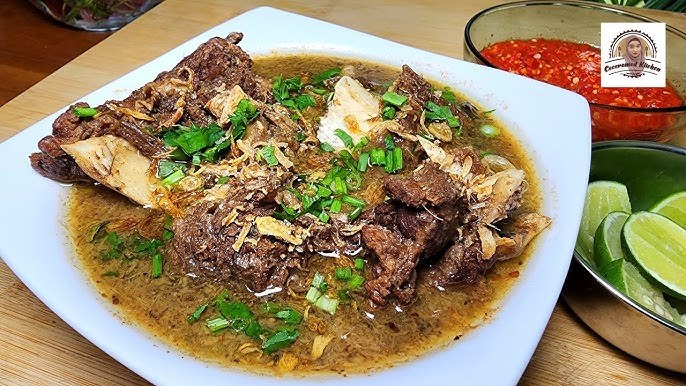
Sop Konro Sapi Iga: Beef Konro Rib Soup
Premium Makassar beef rib soup
📑 In This Guide
💡 Did You Know?
This authentic recipe has been passed down through generations, preserving the rich flavors of Indonesian cuisine.
🛒 Ingredients
- 700g beef ribs premium
- 150g peanuts ground premium
- 5 shallots
- 3 garlic
- 3cm ginger
- 3cm turmeric
- 2 lemongrass
- 3 lime leaves
- salt
- rice cake
👨🍳 Instructions
- Boil ribs very tender premium
- Grind shallots garlic ginger turmeric
- Saute add lemongrass lime leaves
- Pour broth add peanuts boil
- Add ribs thick rich
- Serve rice cake
💡 Tips
Premium peanut thickens broth.
❓Frequently Asked Questions
What is Sop Konro Sapi Iga: Beef Konro Rib Soup?
Premium Makassar beef rib soup
Where does Sop Konro Sapi Iga: Beef Konro Rib Soup come from?
Sop Konro Sapi Iga: Beef Konro Rib Soup originates from Makassar. It is a beloved traditional dish that has been passed down through generations of Indonesian cooks.
What makes Sop Konro Sapi Iga: Beef Konro Rib Soup broth special?
The broth in Sop Konro Sapi Iga: Beef Konro Rib Soup gets its distinctive flavor from 3cm ginger, 2 lemongrass. The broth is typically simmered for hours to extract maximum flavor from the bones and spices.
Is Sop Konro Sapi Iga: Beef Konro Rib Soup difficult to make?
Sop Konro Sapi Iga: Beef Konro Rib Soup requires moderate cooking skills. While the steps are clear, some techniques need practice.
How do I store leftover Sop Konro Sapi Iga: Beef Konro Rib Soup?
Store leftover Sop Konro Sapi Iga: Beef Konro Rib Soup in an airtight container in the refrigerator for up to 4-5 days. The flavors actually improve overnight as the spices continue to meld.
🍽️You Might Also Like
🗺️More from Makassar
🥘Recipes Using Similar Ingredients
← Previous Recipe
Nasi Goreng Kambing Kremes: Crispy Goat Fried Rice
Jakarta
Next Recipe →
Sop Kaki Sapi Gulai: Beef Trotter Curry Soup
Java
Recipe researched by the NusantaraEats Editorial Team
This recipe has been carefully researched, tested, and documented to preserve authentic Indonesian culinary traditions. Sources include traditional cookbooks, regional culinary experts, and cultural heritage references from Indonesia.