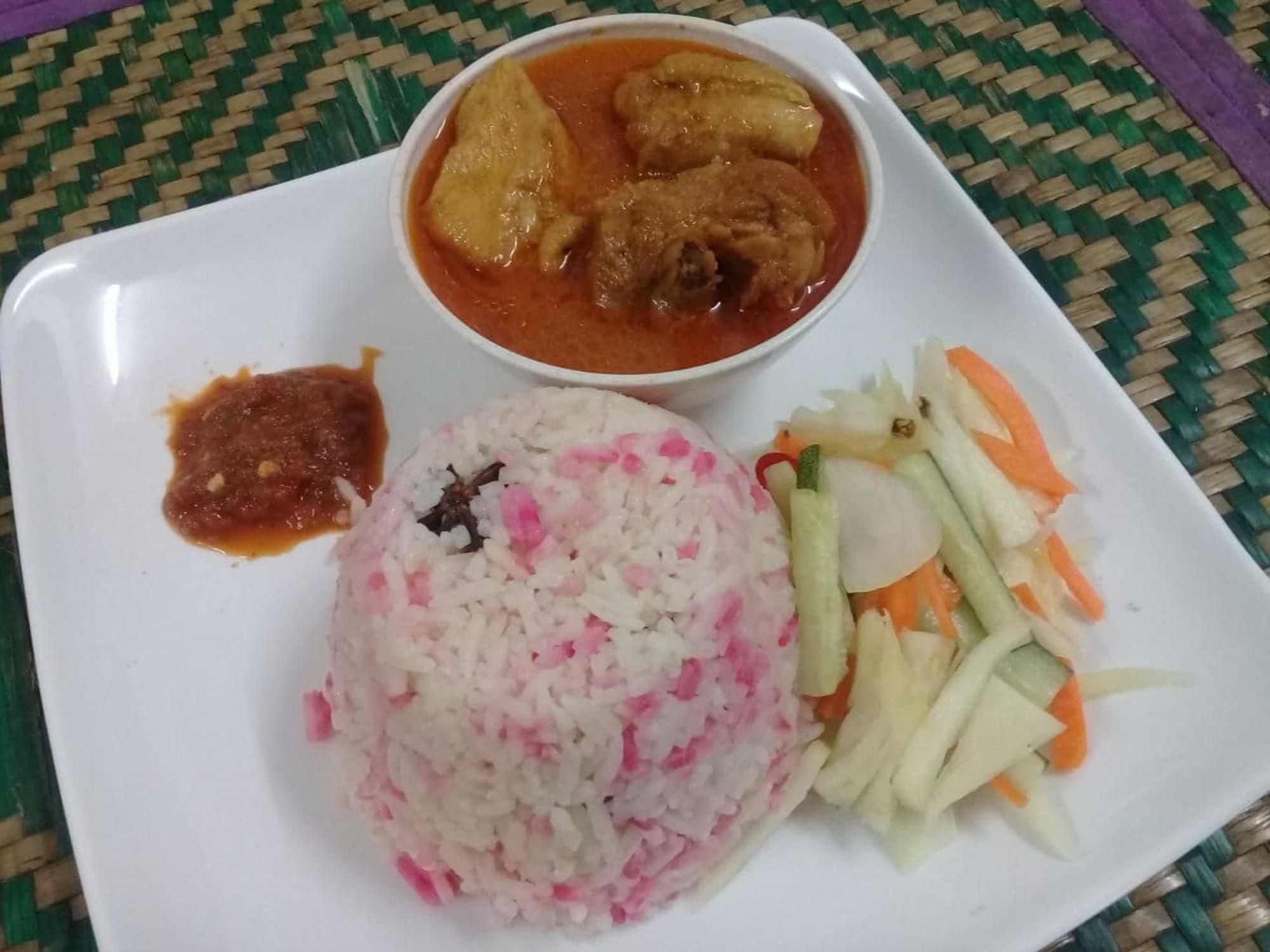
Nasi Minyak: Oily Spiced Rice
A West Sumatran rice dish cooked in spiced oil and ghee, producing fragrant, golden grains. Often served at Minangkabau celebrations.
📑 In This Guide
💡 Did You Know?
This authentic recipe has been passed down through generations, preserving the rich flavors of Indonesian cuisine.
🛒 Ingredients
- 500 g basmati or jasmine rice
- 3 tbsp ghee
- 2 tbsp cooking oil
- 2 onions, thinly sliced
- 4 cardamom pods
- 3 cloves
- 1 cinnamon stick
- 2 bay leaves
- 1 tsp cumin
- 200 ml warm water
- Salt to taste
- Fried chicken or rendang for serving
👨🍳 Instructions
- Heat ghee and oil in a heavy pot.
- Fry onions until golden. Add cardamom, cloves, cinnamon, bay leaves, and cumin.
- Add drained rice and stir to coat in the spiced oil.
- Pour in warm water and salt.
- Cover and cook on low heat until rice is done.
- Rest for 10 minutes before fluffing.
- Serve with fried chicken or rendang.
❓Frequently Asked Questions
What is Nasi Minyak: Oily Spiced Rice?
A West Sumatran rice dish cooked in spiced oil and ghee, producing fragrant, golden grains. Often served at Minangkabau celebrations.
Where does Nasi Minyak: Oily Spiced Rice come from?
Nasi Minyak: Oily Spiced Rice originates from Indonesia. It is a beloved traditional dish that has been passed down through generations of Indonesian cooks.
Is Nasi Minyak: Oily Spiced Rice difficult to make?
Nasi Minyak: Oily Spiced Rice requires moderate cooking skills. While the steps are clear, some techniques need practice.
How do I store leftover Nasi Minyak: Oily Spiced Rice?
Store leftover Nasi Minyak: Oily Spiced Rice in an airtight container in the refrigerator for up to 4-5 days. The flavors actually improve overnight as the spices continue to meld.
🍽️You Might Also Like
🗺️More from Indonesia
🥘Recipes Using Similar Ingredients
← Previous Recipe
Nasi Bogana: Tegal Ceremonial Rice
Indonesia
Next Recipe →
Gulai Ayam: Chicken Curry
Minangkabau, West Sumatra
Recipe researched by the NusantaraEats Editorial Team
This recipe has been carefully researched, tested, and documented to preserve authentic Indonesian culinary traditions. Sources include traditional cookbooks, regional culinary experts, and cultural heritage references from Indonesia.