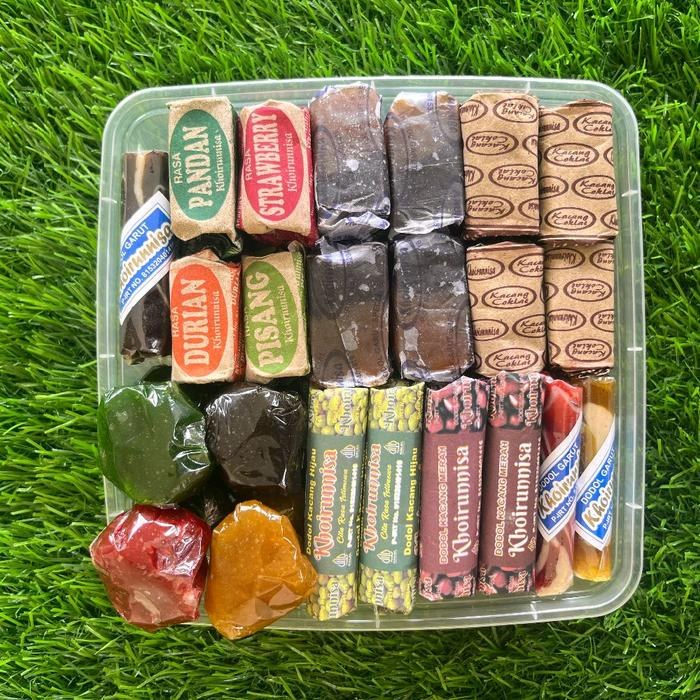
Dodol Garut: Garut Toffee Confection
Dodol Garut is a famous confectionery from Garut, West Java, made from glutinous rice flour, coconut milk, and palm sugar cooked for hours until it becomes a thick, sticky, and glossy toffee. It has a rich, sweet caramel flavour with a smooth, chewy texture. It is one of Indonesia's most iconic souvenir sweets.
📑 In This Guide
💡 Did You Know?
This authentic recipe has been passed down through generations, preserving the rich flavors of Indonesian cuisine.
🛒 Ingredients
- 1 kg rice flour glutinous rice
- 2 liter thick coconut milk
- 2 kg granulated sugar
- 500 g palm sugar
- 2 sheets pandan leaves
- 1 tsp salt
- Durian (opsional)
👨🍳 Instructions
- Mix glutinous rice flour with coconut milk, Stir until larut
- add sugar, palm sugar, pandan, and salt
- Cook with heat medium sambil terus stirred
- Stir terus-menerus selama 4-6 hours until thickens
- Dodol akan mengkilap and tidak lengket on wok
- Pour to baking tray yang sudah diolesi oil
- let stand cold and mengeras, then cut into pieces
💡 Tips
Stir continuously without stopping to prevent burning. Be patient during the long cooking process.
📜History & Origin
The Story Behind This Dish
Dodol Garut has been famous since the colonial era as a signature souvenir from the city of Garut. The production process has been passed down through generations.
🔥Cooking Mastery
Technique
Cooking glutinous rice flour batter with coconut milk and sugar for hours while stirring constantly until thickened.
🗺️Regional Variations
Regional Differences
Durian dodol, peanut dodol, jackfruit dodol, and cheese dodol are popular variations of Dodol Garut.
🥗Nutrition & Dietary Info
Nutritional Profile
Very high carbohydrates from flour and sugar. Fat from coconut milk. Very high in calories.
❓Frequently Asked Questions
What is Dodol Garut: Garut Toffee Confection?
Dodol Garut is a famous confectionery from Garut, West Java, made from glutinous rice flour, coconut milk, and palm sugar cooked for hours until it becomes a thick, sticky, and glossy toffee. It has a rich, sweet caramel flavour with a smooth, chewy texture. It is one of Indonesia's most iconic souvenir sweets.
Where does Dodol Garut: Garut Toffee Confection come from?
Dodol Garut: Garut Toffee Confection originates from Garut, West Java. It is a beloved traditional dish that has been passed down through generations of Indonesian cooks.
Can I find Dodol Garut: Garut Toffee Confection outside Indonesia?
Dodol Garut: Garut Toffee Confection can be found at Indonesian restaurants and Asian grocery stores in many countries. However, the authentic taste is best experienced in Indonesia. You can also make it at home using the recipe above — many ingredients can be substituted with readily available alternatives.
Why does Dodol Garut: Garut Toffee Confection take so long to cook?
The extended cooking time of 360 minutes is essential for allowing the spices to fully penetrate the meat and the sauce to reduce to a rich, concentrated consistency. Patience is the secret ingredient — rushing will compromise the authentic taste.
Is Dodol Garut: Garut Toffee Confection difficult to make?
Dodol Garut: Garut Toffee Confection is a challenging dish that rewards patience and attention to detail.
Can I use light coconut milk for Dodol Garut: Garut Toffee Confection?
While light coconut milk can be used, the traditional recipe calls for thick coconut milk (santan kental) for authentic richness and flavor.
How do I store leftover Dodol Garut: Garut Toffee Confection?
Store leftover Dodol Garut: Garut Toffee Confection in an airtight container in the refrigerator for up to 4-5 days. The flavors actually improve overnight as the spices continue to meld.
🍽️You Might Also Like


🍚Serve With
🥘Recipes Using Similar Ingredients
← Previous Recipe
Kue Gapit: Cirebon Waffle Cracker
Cirebon, West Java
Next Recipe →
Madumongso: Fermented Black Rice Sweet
Madiun, East Java
Recipe researched by the NusantaraEats Editorial Team
This recipe has been carefully researched, tested, and documented to preserve authentic Indonesian culinary traditions. Sources include traditional cookbooks, regional culinary experts, and cultural heritage references from Indonesia.