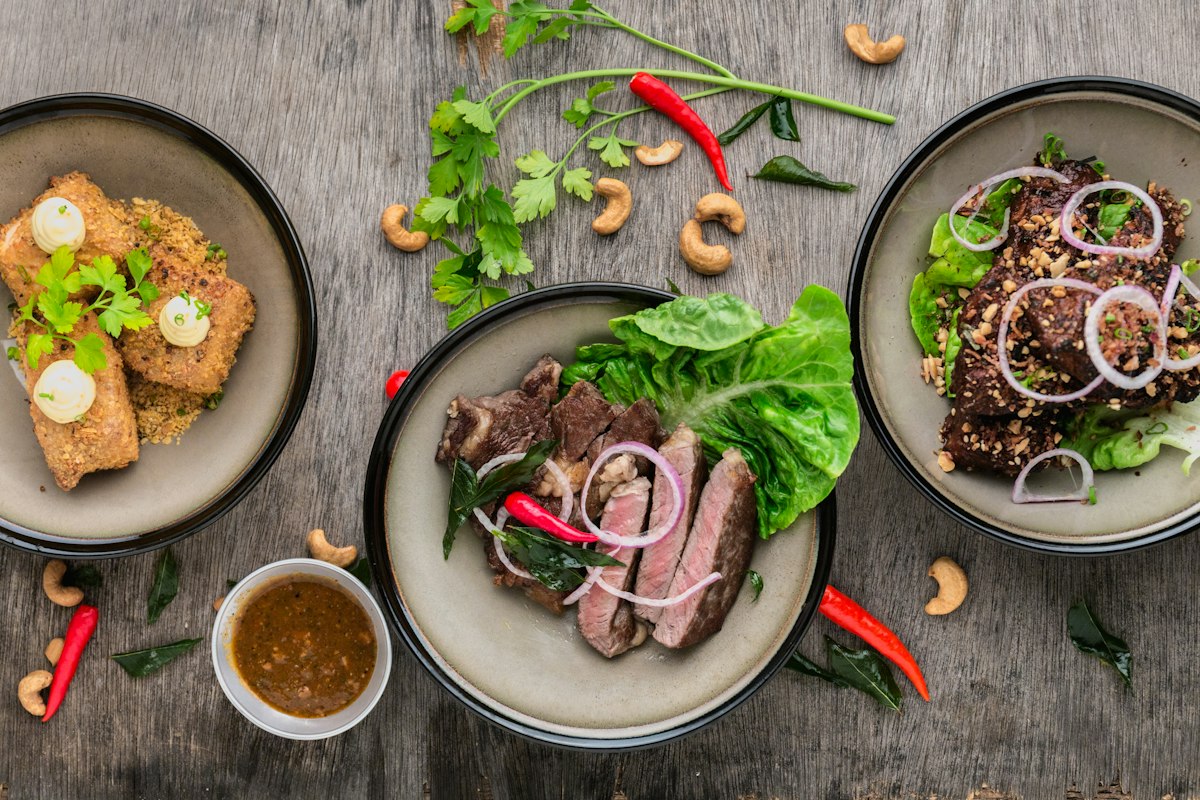
Indonesia's street food scene is one of the world's great eating adventures — chaotic, fragrant, and absurdly affordable. But for first-timers, a cart-lined Jakarta alley can be intimidating: What is that? How do I order? Is it safe? This guide answers everything, so you can eat like a local from day one.
How Street Food Works in Indonesia
Indonesian street vendors (kaki lima, literally "five legs" — three cart wheels plus the vendor's two) specialize in one dish and perfect it over decades. You do not browse a menu; you walk up, point or name the dish, and it appears in minutes. Most carts have plastic stools nearby — sitting down signals you are eating there. Prices run from $0.50 to $2 per portion, paid in cash.
5 Dishes Every Beginner Should Try
1. Ketoprak — Jakarta's Chopped Salad
Fried tofu, rice vermicelli, bean sprouts, and cucumber chopped together and drowned in sweet peanut sauce with a cracker on top. It is vegetarian, filling, and the perfect gentle introduction. Try our Ketoprak recipe at home.
2. Bakso — Meatball Soup
Bouncy beef meatballs in clear broth with noodles, served from carts with a distinctive tok-tok knocking sound. Customize with sambal, vinegar, and fried shallots. Our Bakso Malang Komplit recipe recreates the full loaded bowl.
3. Sate Ayam — Chicken Satay
Skewers of marinated chicken grilled over charcoal and slathered in peanut sauce, served with lontong (compressed rice cakes). The Madura-style version is the most famous — see our Sate Ayam Madura recipe.
4. Martabak Manis — Sweet Thick Pancake
A spongy, buttery pancake loaded with chocolate, cheese, condensed milk, or peanuts — sometimes all four. Sold from carts at night, it is Indonesia's answer to dessert pizza. Make it with our Martabak Manis Bangka recipe.
5. Klepon — Pandan Rice Balls
Chewy green glutinous-rice balls filled with molten palm sugar and rolled in coconut. One bite and the sugar bursts — a rite of passage. Recipe: Klepon.
How to Order (Even With Zero Indonesian)
Learn three phrases and you are set: "Satu, ya" (one, please), "Bungkus" (takeaway), and "Pedas" (spicy) or "Tidak pedas" (not spicy). Pointing works perfectly — vendors are used to tourists. Most carts display the dish name on a banner; matching it to photos in this guide is enough.
Safety tips: eat where locals queue (high turnover = fresh food), choose carts where food is cooked to order in front of you, and drink bottled water. Your stomach will thank you.
When and Where to Go
Street food peaks at two times: breakfast (6–9 AM) for bubur ayam (chicken porridge) and nasi uduk, and night (7 PM–midnight) for martabak, sate, and bakso. In Jakarta, head to Jalan Sabang or Pecenongan; in Yogyakarta, Malioboro Street; in Bandung, the carts around Dago. Every city has its own legends — ask your hotel receptionist for their personal favorite.
Bring It Home
The tragedy of street food is leaving it behind — but many of these dishes are very cookable at home. Start with our tested recipes linked above and recreate the cart experience in your own kitchen.