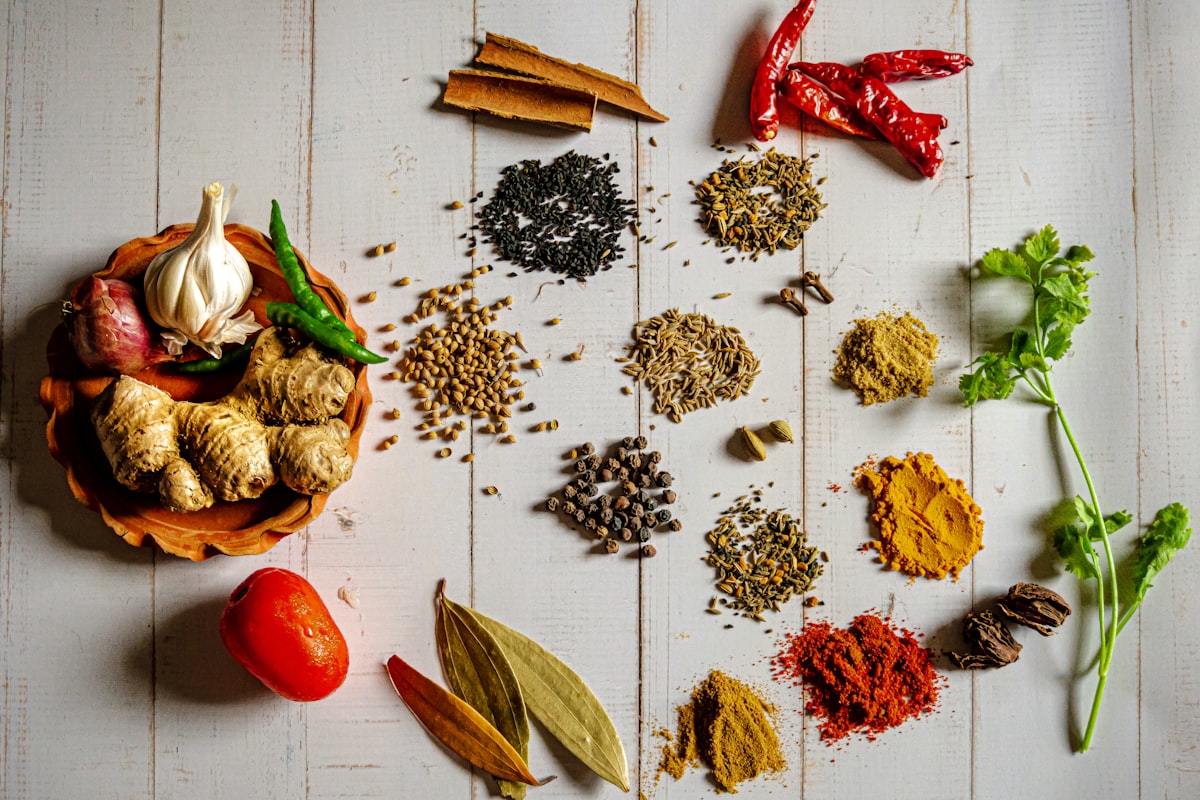
Indonesian food is famous for its deep, layered flavors — and the secret is always the spices. Unlike cuisines that rely on a single dominant seasoning, Indonesian cooking builds flavor from a spice paste (bumbu): a ground blend of fresh and dried aromatics that forms the base of nearly every dish. If you want to cook Indonesian food at home, these ten spices are your essential starting kit.
1. Galangal (Lengkuas)
Galangal looks like ginger but tastes completely different — piney, citrusy, and sharp. It is non-negotiable in dishes like Soto Ayam and rendang. How to use it: bruise a 2-inch piece with the back of a knife and simmer it in soups and curries, then remove before serving. Dried galangal powder is a pale substitute; fresh is always better.
2. Lemongrass (Serai)
Lemongrass gives Indonesian food its bright, lemony top note without any sourness. You will find it in Ayam Betutu and most coconut-based dishes. How to use it: trim the woody top, bruise the stalk, and add it whole to simmering liquids. For pastes, use only the tender lower third, sliced thin.
3. Kaffir Lime Leaves (Daun Jeruk)
These glossy double-lobed leaves add an intense citrus-floral aroma that defines dishes like Beef Rendang. How to use them: tear or scrunch to release the oils, then drop into curries and soups. Remove the tough center rib if eating the leaf itself bothers you — most cooks fish the leaves out before serving.
4. Turmeric (Kunyit)
Fresh turmeric stains everything golden and adds an earthy, slightly bitter warmth. It colors Nasi Kuning (yellow rice) and Soto Ayam. How to use it: peel and grate fresh rhizomes into spice pastes, or use 1 teaspoon of ground turmeric per teaspoon of fresh. Wear gloves — the stain is legendary.
5. Candlenut (Kemiri)
Candlenut is Indonesia's answer to thickening curries — it gives body and richness without dairy. Essential in Gulai and opor. How to use it: always toast or fry candlenuts before grinding (raw candlenut is mildly toxic). Macadamia nuts are the closest substitute.
6. Coriander Seeds (Ketumbar)
Toasted coriander seeds taste nutty and citrusy — the backbone of Sate Madura marinade. How to use them: dry-toast in a pan until fragrant (about 2 minutes), then grind. Pre-ground coriander loses its punch within weeks, so buy whole seeds.
7. Cumin (Jintan)
Used sparingly, cumin adds smoky depth to Tongseng and gulai. How to use it: a little goes a long way — start with half a teaspoon of toasted, ground cumin per dish. It pairs beautifully with coriander in a 2:1 ratio.
8. White Pepper (Lada Putih)
Indonesian cooks reach for white pepper far more often than black. It gives Sop Ayam its gentle, warming heat. How to use it: add toward the end of cooking — prolonged boiling turns it bitter.
9. Cloves (Cengkeh)
Indonesia grows most of the world's cloves, and they perfume dishes like Tongseng and spiced drinks such as Wedang Uwuh. How to use them: use whole cloves in braises (2–3 per pot) and remove before serving. Ground clove is potent — measure in pinches, not spoons.
10. Nutmeg (Pala)
Native to the Banda Islands, nutmeg adds sweet warmth to Sop Buntut and festive cakes like Nastar. How to use it: grate fresh with a microplane — pre-ground nutmeg is a shadow of the real thing.
Storage tip: whole spices keep for a year in airtight jars away from light; ground spices fade in 3–6 months. Buy small quantities and toast before grinding for maximum aroma.
Building Your First Bumbu
To taste how these spices work together, try a basic bumbu kuning (yellow spice paste): blend shallots, garlic, turmeric, candlenut, coriander, and a little ginger with oil into a smooth paste, then fry until fragrant. This single paste is the starting point for Soto Ayam, Ayam Goreng Lengkuas, and countless other dishes. Once you can make bumbu from scratch, Indonesian cooking opens up completely.